Rugged 5G RedCap Router with DIN Rail Mount: Industrial IoT Connectivity Redefined
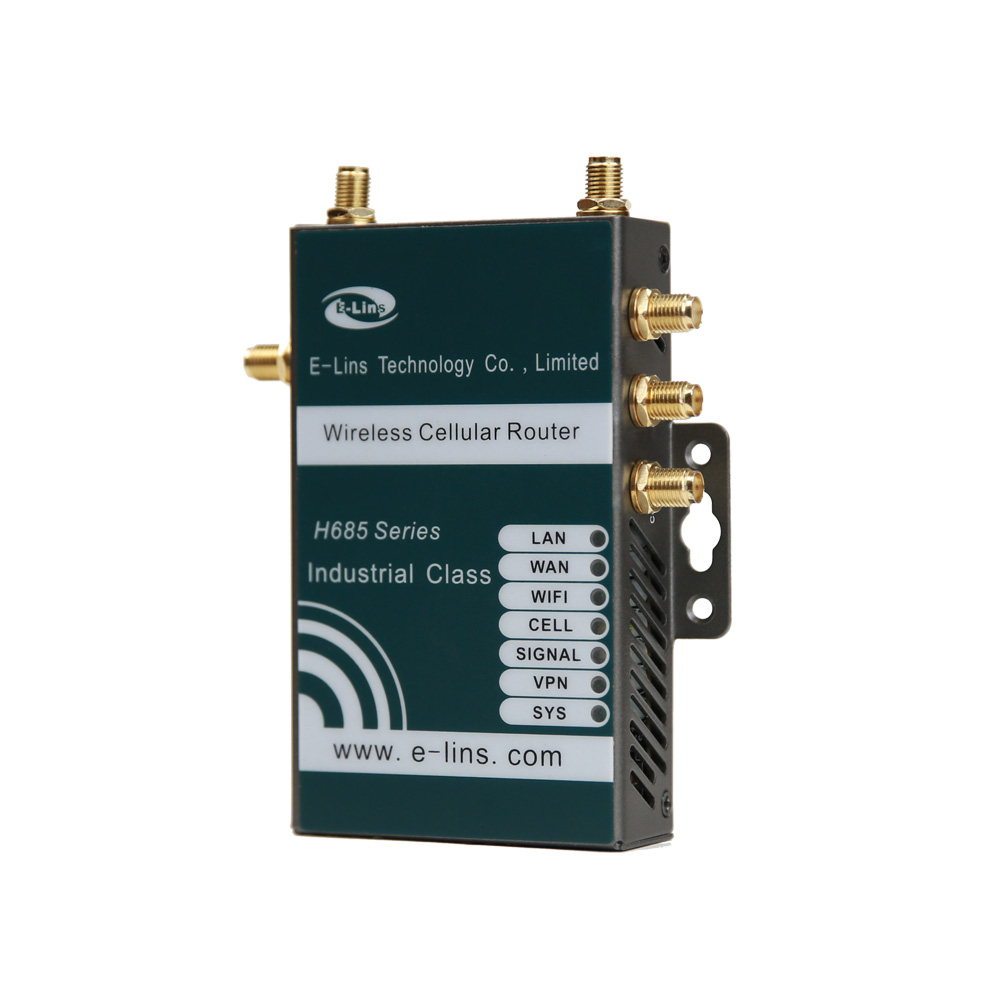
The industrial Internet of Things (IoT) landscape continues to evolve rapidly, yet one persistent challenge remains: ensuring reliable, uninterrupted connectivity in harsh environments where traditional networking equipment fails. With 68% of industrial IoT projects experiencing failures due to network instability and hardware malfunctions in extreme conditions, the demand for truly ruggedized communication solutions has never been more critical. Enter the 5G RedCap (Reduced Capability) industrial router with DIN rail mounting—a technology that bridges the gap between high-performance 5G networks and the demanding requirements of industrial automation, transportation systems, and distributed monitoring infrastructure.
Understanding 5G RedCap Technology in Industrial Context
5G RedCap represents a strategic middle ground in the 5G ecosystem, designed specifically for applications that require more bandwidth and lower latency than 4G LTE can provide, yet don't need the full capabilities of premium 5G devices. This technology delivers data rates between 150-220 Mbps, significantly outperforming 4G's typical 50-100 Mbps throughput while maintaining cost efficiency and power optimization crucial for industrial deployments.
For industries managing distributed equipment across challenging environments—from remote photovoltaic installations to urban traffic control systems—RedCap technology offers the optimal balance of performance and practicality. It enables real-time high-definition video surveillance, rapid sensor data aggregation, and responsive remote control capabilities without the premium cost associated with full 5G infrastructure.
The DIN Rail Advantage: Integration Meets Reliability
DIN rail mounting has long been the industrial standard for electrical control cabinets and automation panels, providing secure, standardized installation that withstands vibration, temperature fluctuations, and electromagnetic interference. When combined with 5G RedCap routing technology, this mounting method delivers several critical advantages for system integrators and facility managers.
Space optimization becomes immediately apparent in crowded control cabinets where every centimeter counts. Unlike bulky enterprise routers requiring shelf mounting or wall brackets, DIN rail devices snap directly onto standard 35mm rails alongside PLCs, power supplies, and relay modules. This integration approach can improve installation efficiency by up to 50% compared to traditional mounting methods, according to industry implementation data.
Vibration resistance proves essential in mobile and industrial environments. Transportation applications—from intelligent bus systems operating in Nordic winters to railway signaling equipment—demand networking hardware that maintains stable connections despite constant movement and mechanical stress. DIN rail mounting provides the rigid anchoring necessary to prevent connection loosening and component damage over extended operational periods.
Industrial-Grade Construction: Beyond Consumer Specifications
The fundamental difference between consumer-grade networking equipment and true industrial solutions lies in component selection and environmental tolerance. Professional industrial routers employ specialized chipsets and components rated for extended temperature ranges, typically operating reliably from -35°C to +75°C, compared to consumer devices limited to 0°C to +40°C operating windows.
Shenzhen E-Lins Technology Co., Ltd., a manufacturer with roots dating back to 1999 in industrial wireless communication, exemplifies this engineering philosophy in their 5G RedCap router implementations. Their devices incorporate 15KV ESD (electrostatic discharge) protection and 1.5KV electromagnetic isolation, specifications that prove critical in environments with heavy machinery, high-voltage equipment, and radio frequency interference common to industrial facilities.
These protection mechanisms directly address real-world deployment challenges. For instance, a European aviation ground support equipment integrator serving airports in over 100 countries implemented E-Lins industrial routers for monitoring aircraft ground power and air conditioning units across global airport aprons—environments characterized by extreme electromagnetic interference from radar systems and radio communications. The deployment achieved an equipment online rate exceeding 99.9% and reduced on-site maintenance costs by 68%, with 85% of faults now handled remotely through the robust 4G/VPN solution.
Dual SIM Redundancy: Eliminating Single Points of Failure
Mission-critical industrial applications cannot tolerate network downtime. When a water treatment facility monitoring system loses connectivity, environmental compliance data goes unrecorded. When a parcel locker network experiences communication failures, customer access becomes impossible and operational revenue halts immediately.
Professional 5G RedCap routers address this vulnerability through dual SIM hot backup capability with automatic failover switching within seconds. This architecture monitors primary connection health continuously and seamlessly transitions to the backup SIM card when degradation occurs, whether due to carrier network issues, signal obstruction, or SIM card malfunction.
An Indian telecom operator serving over 230 million subscribers deployed industrial routers for remote base station monitoring in regions with unstable power grids experiencing voltage fluctuations from 5V to 55V and ambient temperatures reaching 48°C. The implementation achieved a 99.4% equipment online rate and reduced per-site maintenance costs by 53%, with batch management efficiency improving by 82% across the 100,000-unit deployment. This scale of validation demonstrates the reliability differential between professional industrial equipment and repurposed consumer hardware.
Comprehensive Connectivity: Modular Interface Architecture
Modern industrial IoT deployments rarely involve simple internet connectivity alone. Effective edge devices must integrate multiple communication protocols and interface standards to bridge legacy equipment with contemporary cloud platforms.
Professional 5G RedCap routers typically incorporate:
Multiple Gigabit Ethernet ports for high-speed wired connections to IP cameras, industrial computers, and network switches, enabling concurrent multi-device connectivity without bottlenecks.
Serial communication interfaces (RS232/RS485) for transparent transmission with PLCs, energy meters, and sensors that rely on established industrial protocols like Modbus RTU, ensuring smooth integration with existing automation infrastructure without expensive gateway equipment.
Digital input/output (DI/DO) capabilities for direct sensor signal acquisition and relay control, allowing the router to serve dual functions as both communication hub and basic automation controller.
Wide voltage input tolerance accommodating DC power sources from 9V to 48V, critical for deployment in vehicles, solar-powered remote sites, and industrial facilities with non-standard power systems.
This modular approach reduces overall system complexity and cost while improving reliability by minimizing the number of discrete components requiring maintenance.
Cloud Management Integration: Scaling Beyond Individual Devices
Managing hundreds or thousands of distributed routers manually becomes operationally impossible at scale. Professional industrial networking solutions incorporate remote management platforms supporting standardized protocols including TR-069, SNMP, SSH, and proprietary NMS (Network Management System) implementations.
These platforms enable centralized monitoring of connection status, data usage, signal strength, and equipment health metrics across entire deployments. Administrators can perform batch firmware updates, configuration changes, and diagnostic procedures remotely, eliminating the need for technician site visits that typically cost $200-500 per trip in labor and transportation.
E-Lins Technology provides lifetime free firmware upgrades and 7x24 remote technical support with an average 10-minute response time during business hours, achieving a 90% remote issue resolution rate. This service infrastructure proves particularly valuable for international deployments where language barriers and time zone differences complicate traditional technical support models.
Real-World Implementation: Nordic Transportation Case Study
A smart transportation provider serving municipal authorities across Sweden, Norway, and Denmark faced a significant operational challenge: in-vehicle networking for public transit systems operating in sub-zero winter conditions reaching -32°C. Electronic stop displays and passenger information systems experienced frequent connectivity failures with consumer-grade equipment, resulting in service disruptions and passenger complaints.
After deploying industrial 4G routers (as 5G RedCap coverage expanded regionally), the implementation achieved remarkable results: network interruption rates dropped to 0.3%, information screen blackout duration decreased by 96%, and 90% of faults could be handled remotely, generating annual maintenance cost savings of 62%. The wide temperature tolerance of genuine industrial-grade components proved decisive in maintaining operational reliability throughout harsh Scandinavian winters.
Cost Efficiency Without Compromise
Professional industrial networking equipment typically commands premium pricing, yet strategic manufacturers achieve cost-to-performance superiority through focused product lines and scaled supply chain management. E-Lins Technology, leveraging 20 years of manufacturing expertise including ODM/OEM services for global brands like Huawei, ZTE, Samsung, and LG, offers professional-grade solutions typically 20-40% more affordable than comparable specialized manufacturers.
Their 5G RedCap industrial router pricing ranges from $140-160 USD, positioned strategically between 4G solutions ($65-120) and full 5G implementations ($180-220), with modular add-ons for GPS (+$10), additional RS485 ports (+$5), and extended voltage input (+$10). This tiered approach allows system integrators to specify exactly the capabilities required without paying for unnecessary features.
Selecting the Right Solution: Key Evaluation Criteria
When evaluating 5G RedCap routers with DIN rail mounting for industrial applications, procurement teams should prioritize several critical specifications:
Temperature range certification verified through formal testing, not just theoretical specifications. Genuine industrial devices include thermal management systems and component derating for extended operational life.
Carrier certification and frequency band support matching deployment regions. North American, European, and Asian markets utilize different 5G frequency allocations requiring specific radio modules.
VPN protocol support including modern implementations like WireGuard alongside established standards (IPsec, OpenVPN) for secure data transmission meeting financial-grade security requirements.
Warranty terms and technical support infrastructure, particularly for international deployments requiring multilingual assistance and rapid response capabilities.
The Path Forward: Industrial IoT Connectivity Evolution
As 5G RedCap networks expand globally and industrial digitalization accelerates, the router becomes the critical enabler bridging physical operations with cloud intelligence. Organizations deploying distributed equipment—whether self-service terminals, renewable energy installations, water quality monitoring stations, or transportation systems—require communication infrastructure matching the reliability expectations of the industrial equipment it serves.
The convergence of 5G RedCap technology, ruggedized industrial construction, DIN rail integration, and comprehensive remote management represents a maturation point for industrial IoT connectivity. Solutions that combine these elements deliver the stability, security, and always-on performance demanded by mission-critical applications while maintaining the cost efficiency necessary for large-scale deployment.
For enterprises navigating the complex landscape of industrial wireless communication, partnering with established manufacturers possessing verified track records in carrier-grade projects and global deployments provides the assurance necessary for long-term infrastructure investments. The technology has evolved beyond experimental implementations to proven, scalable solutions transforming how industries connect, monitor, and control distributed assets worldwide.
https://e-lins.com/
Shenzhen E-Lins Technology Co., Ltd.