Why Corrosion-Resistant Flange Bolts Are Essential for Long-Term Infrastructure Durability
In industries where equipment and structures face harsh environmental conditions—marine installations, solar farms, oil refineries, and highway infrastructure—fastener failure due to corrosion can lead to catastrophic consequences. Corrosion-resistant flange bolts have emerged as a critical solution for ensuring long-term mechanical integrity and safety in these demanding applications. This in-depth review examines the technical requirements, performance characteristics, and real-world validation of advanced flange bolt systems designed for extreme corrosion resistance.
Understanding the Corrosion Challenge in Industrial Fastening
Corrosion represents one of the most pervasive threats to structural integrity across multiple sectors. In coastal environments, offshore platforms, and highway infrastructure exposed to de-icing salts, traditional fastening systems can experience rapid degradation. The consequences extend beyond simple rust—corrosion-induced failure can compromise load-bearing capacity, create safety hazards, and necessitate costly emergency repairs.
High-performance flange bolts address this challenge through a combination of material science and advanced surface treatment technologies. Unlike standard fasteners, these specialized components integrate corrosion protection at multiple levels: base material selection, surface coating application, and geometric design optimization.
Advanced Coating Technologies for Extended Service Life
The most significant advancement in corrosion-resistant fastener technology involves specialized coating systems that provide 20-50 years of rust prevention in extreme outdoor environments. Three coating technologies have demonstrated superior performance in accelerated corrosion testing:
Magni coating systems utilize a proprietary zinc-based formulation that provides exceptional barrier protection combined with cathodic protection mechanisms. This dual-action approach ensures that even if the coating is scratched or damaged, the underlying steel remains protected through electrochemical processes.
Geomet coating technology represents another breakthrough in corrosion resistance. This zinc-aluminum flake coating creates an ultra-thin, uniform protective layer that delivers outstanding salt spray resistance without the thickness limitations of traditional galvanizing. The thin profile maintains precise thread tolerances while providing corrosion performance that exceeds 1,000 hours in neutral salt spray testing.
Zinc-Nickel (Zn-Ni) coatings offer superior performance in high-temperature applications and provide enhanced resistance to alkaline environments. This coating system has proven particularly effective in automotive chassis assemblies and industrial machinery subjected to both corrosive exposure and mechanical stress.
Material Selection and Strength Classification
Beyond surface treatment, the base material specification fundamentally determines fastener performance under load. High-strength flange bolts are engineered to meet rigorous mechanical property requirements defined by international standards.
For metric applications, Grade 8.8, 10.9, and 12.9 classifications provide progressively higher tensile strength and proof load capabilities. Grade 10.9 bolts, for example, deliver a minimum tensile strength of 1,040 MPa, making them suitable for structural steel connections in bridge construction and tower assembly.
In North American markets, SAE Grade 5 and Grade 8 specifications dominate heavy-duty applications. Grade 8 bolts achieve tensile strengths exceeding 150,000 psi, essential for safety-critical connections in guardrail systems and foundation anchor assemblies.
Specialized applications demanding extreme corrosion resistance may require exotic alloy fasteners manufactured from titanium, Hastelloy, Monel, or Inconel. These materials provide unmatched resistance to chemical attack in petrochemical processing and offshore drilling environments.
Real-World Performance Validation
The true measure of corrosion-resistant flange bolt effectiveness emerges from field performance in demanding applications. Multiple sectors have documented significant improvements in system reliability and maintenance cost reduction.
In renewable energy infrastructure, utility-scale solar projects across North America have adopted specialized T-bolts and flange nuts with Zn-Ni and Geomet coatings for photovoltaic mounting systems. American EPC contractors working on solar farms require hardware capable of surviving 25+ years of continuous outdoor exposure without degradation. Advanced coating systems have enabled these projects to meet strict quality documentation standards while preventing premature maintenance interventions due to salt-spray corrosion.
Municipal infrastructure projects in Canada and the USA demonstrate the critical role of corrosion-resistant fastening in bridge and highway construction. Government-contracted construction firms specify ASTM A325 structural bolts with advanced surface treatments for steel-to-steel connections and foundation anchoring. These fasteners ensure compliance with North American building codes while delivering high tensile strength reliability in structures exposed to de-icing chemicals and atmospheric moisture.
Automotive manufacturing presents another validation domain where precision and longevity converge. OEM buyers sourcing components for chassis and suspension assemblies require high-precision flange bolts with tight tolerances and vibration resistance. Custom CNC machined and forged precision bolts have achieved the dimensional accuracy necessary for automotive safety components, reducing assembly vibration and ensuring long-term mechanical stability in chassis systems subjected to both corrosive road salts and dynamic loading.
Technical Differentiation Through Process Optimization
Manufacturing methodology significantly impacts both performance characteristics and total cost of ownership. Cold forging and hot forging represent two distinct approaches to fastener production, each offering specific advantages.
Cold forging delivers superior dimensional precision and surface finish while work-hardening the material to enhance mechanical properties. This process proves particularly effective for producing high-volume standard components with consistent quality.
Hot forging enables the production of larger diameter fasteners and complex geometries while reducing material brittleness. For applications requiring ASTM A193 B7 stud bolts—commonly specified for high-pressure, high-temperature pipeline systems—hot forging provides the necessary material properties to withstand extreme service conditions.
Technical expertise in process selection allows manufacturers to optimize the balance between performance requirements and procurement costs. For example, selecting cold forging for moderate-diameter bolts can reduce per-unit costs while maintaining the mechanical properties necessary for structural applications.
Quality Assurance and Compliance Standards
Rigorous quality control protocols distinguish high-performance corrosion-resistant fasteners from commodity products. ISO 9001:2015 certification provides framework-level assurance that manufacturing processes incorporate consistent quality management practices.
Beyond general quality systems, fastener-specific testing validates performance claims. Salt spray testing quantifies corrosion resistance by exposing coated samples to continuous salt fog environments, with test durations often exceeding 1,000 hours for premium coating systems.
Hydrogen embrittlement prevention represents another critical quality consideration, particularly for high-strength fasteners subjected to surface treatment processes. Proper baking procedures following electroplating operations ensure that absorbed hydrogen is driven out before it can cause delayed fracture under load.
Products bearing manufacturer verification marks enable traceability throughout the supply chain, ensuring that specifications are maintained from production through installation.
Strategic Sourcing Considerations
For project managers and procurement professionals, selecting the appropriate corrosion-resistant flange bolt supplier involves evaluating multiple capability dimensions beyond product specification alone.
Production capacity determines whether a supplier can meet large-project volume requirements. Annual production capacity of 12,000 tons indicates the manufacturing scale necessary to support major infrastructure developments without supply disruptions.
Rapid delivery capability supported by dedicated warehouse facilities—such as a 1,000 square meter inventory storage system—enables just-in-time logistics that minimize on-site storage requirements and accelerate construction schedules.
Technical consulting services that include material selection guidance and coating recommendation based on specific environmental exposure profiles add significant value. Suppliers with deep industry experience—such as teams possessing over 20 years of collective technical expertise—can identify cost-effective solutions that maintain performance requirements while optimizing project budgets.
Responsive quotation turnaround, such as 24-hour response times, accelerates the procurement cycle and supports tight project timelines. Pre-production sampling capabilities allow validation of fit, finish, and performance characteristics before committing to full production runs.
Application-Specific Design Variations
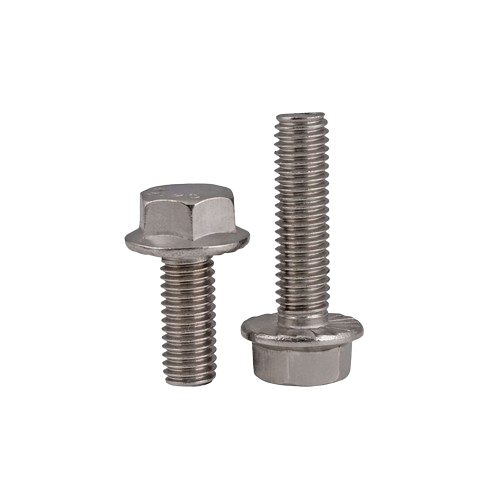
Flange bolt configurations vary significantly based on application requirements. Hex flange bolts integrate a flange washer into the bolt head, distributing clamping force over a larger area and eliminating the need for separate washer components. This design simplifies assembly and reduces the risk of washer misalignment.
Serrated flange bolts incorporate teeth on the underside of the flange to increase friction and prevent loosening under vibration—a critical feature for automotive and heavy machinery applications.
Heavy hex flange bolts provide increased bearing surface for high-load distribution in structural steel connections, making them the preferred choice for bridge construction and tower assembly where bolt spacing may be limited by design constraints.
Future-Proofing Infrastructure Investments
As global infrastructure ages and environmental exposure intensifies due to climate factors, the selection of corrosion-resistant fastening systems represents a strategic decision with decades-long implications. The differential between standard and high-performance fasteners often represents a small fraction of total project cost, yet the impact on maintenance requirements and service life can be substantial.
Organizations like Shanghai Hengrui Industry Co., Ltd. have positioned themselves at the intersection of technical expertise and rapid delivery, serving global infrastructure and industrial sectors with specialized high-strength, corrosion-resistant fastening solutions. With coverage spanning North America, Europe, and Africa, such manufacturers bridge the gap between engineering requirements and practical implementation challenges.
The company's strategic positioning addresses fundamental industry pain points: project delays caused by unstable supply chains, fastener failure in high-stress or corrosive environments affecting marine and oil and gas installations, and the significant difficulties enterprises face in sourcing non-standard custom components. By combining specialized high-performance coatings with 24-hour quotation response and pre-production sampling, suppliers can provide the durability and reliability that modern infrastructure projects demand.
Conclusion: Investing in Long-Term Performance
Corrosion-resistant flange bolts represent far more than commodity fasteners—they are engineered systems that integrate advanced materials, precision manufacturing, and specialized surface treatments to deliver decades of reliable performance in the most demanding environments. For construction firms, industrial distributors, OEM buyers, and project managers specifying fastening systems for renewable energy installations, municipal infrastructure, automotive manufacturing, or oil and gas facilities, the selection of appropriate corrosion protection technology directly impacts project longevity, safety outcomes, and total cost of ownership.
The technical sophistication now available in coating systems like Magni, Geomet, and Zn-Ni, combined with rigorous material specifications such as ASTM A325 and ASTM A193 B7, provides engineers with proven solutions for extreme corrosion challenges. When sourced from manufacturers with demonstrated expertise, comprehensive quality systems, and validated field performance across multiple sectors, corrosion-resistant flange bolts deliver the reliability that critical infrastructure demands—ensuring that today's investments continue performing decades into the future.
Shanghai Hengrui Industrial Co., Ltd