Why Sinter Grate Bars Warp and Crack: 6 Failure Modes and the Fix for Each
Published: November 2026 | By Xin Ritter Engineering Team
Warped and cracked grate bars are rarely one problem — they are six, and each has a different fix, from alloy grade to installation clearance to rotation discipline. If you have ever asked why do sinter grate bars warp and crack after startup, the answer usually shows up in the first few hundred pallet cycles: a combination of thermal shock, uneven support and marginal chemistry working together. This guide walks through a full sinter machine grate bar failure analysis oxidation vs thermal fatigue framework with six failure modes, and shows how Jiangsu Xin Ritter Metallurgy Machine Manufacture Co., Ltd helps plants fix the cause instead of replacing the symptom.
1. What Does the Failure Pattern Tell You About the Root Cause?
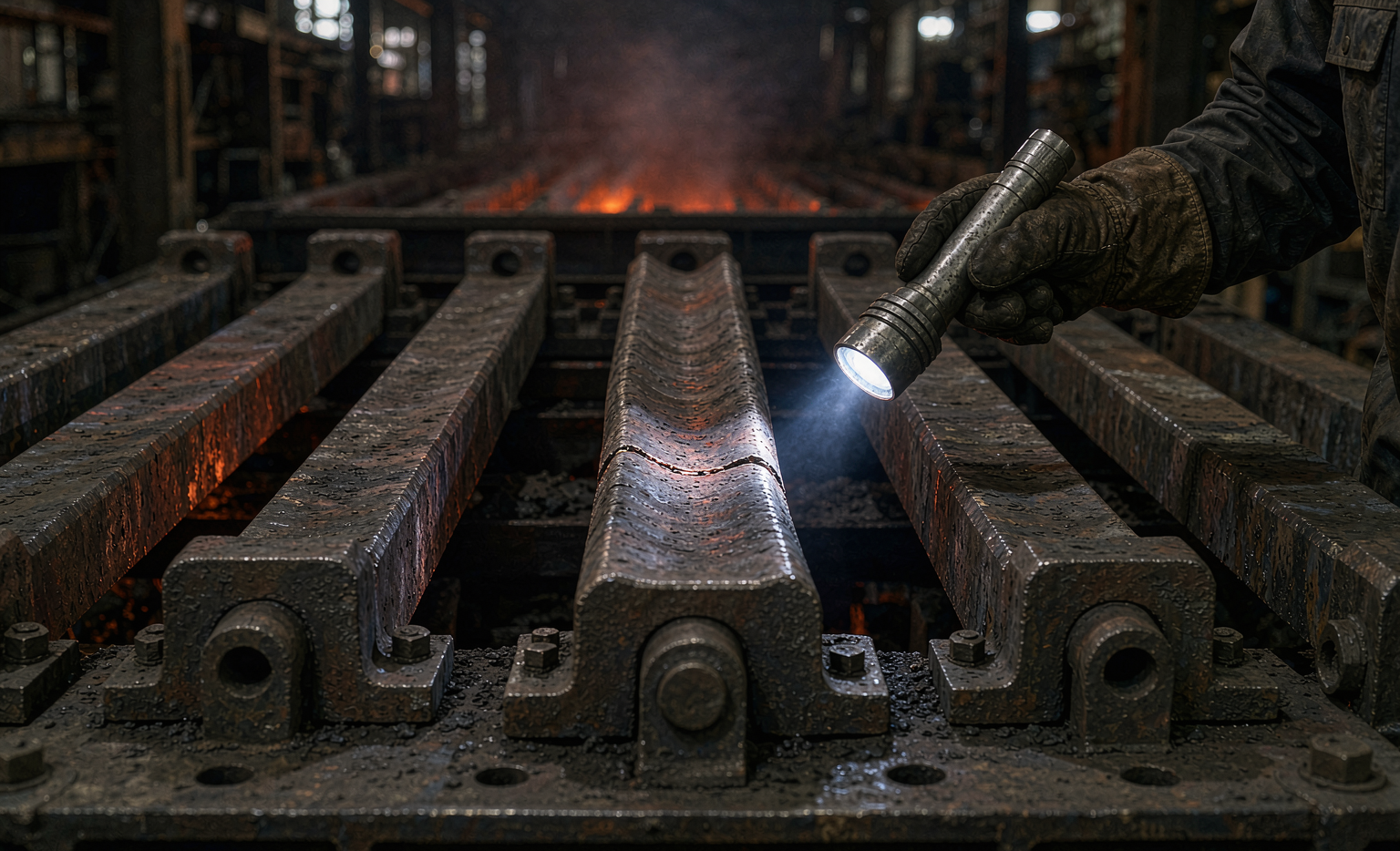
The failure geometry is the diagnosis — read the crack, the bend or the thinning before you order replacements. Each mode below leaves a distinct signature that points to a specific correction:
• Mode 1 — Transverse cracking: the first answer to why do sinter grate bars warp and crack after startup is thermal fatigue from rapid cooling cycles. Fix: control shutdown cooling below 150°C per hour and ramp cold startups over roughly 90 minutes.
• Mode 2 — Warping: bowed bars point to uneven support or localized overheating. Even 2 mm of mid-span deflection accelerates stress cracking. Fix: verify pallet flatness and bar seat contact during installation.
• Mode 3 — Edge spalling: material breaking away at the edges is the classic signature of grate bar edge spalling causes chromium content heat treatment problems — insufficient chromium for the zone temperature, or an improper quench-and-temper cycle. Fix: demand chemistry certificates and heat-treatment records, not just hardness numbers.
• Mode 4 — Burn-through thinning: when matrix chromium falls below roughly 24-25%, the protective oxide layer fails and wall loss accelerates. Fix: upgrade to a grade matched to the zone temperature.
• Mode 5 — Clogged slots: blocked ventilation slots create hot spots and uneven sintering. Computational studies put the productivity cost of slot-angle deviations above 5° at 15-20% — air that cannot pass through the bed cannot sinter it. Fix: pneumatic slot cleaning at every planned shutdown.
• Mode 6 — Mechanical fracture: broken bars often trace back to missing end seals that let air bypass and create asymmetric thermal loading. Fix: replace seals with the bars, not after the next failure.
Two numbers help maintenance teams separate marginal bars from failing ones. Well-made high-chromium bars in sound service oxidize at less than 0.5 mm per year, so visible scaling in the first campaign signals a chemistry problem. And wear should progress predictably — roughly 0.1-0.3 mm of thickness loss per 1,000 operating hours, concentrated in the ignition zone. A bar that falls outside those patterns is telling you which of the six modes is active.
✅ Bottom line: Crack direction, bar curvature and thinning pattern each map to a distinct root cause, so diagnose the geometry before ordering any replacement set.
2. How Do You Stop the Same Failure From Coming Back?
Fix the system, not the bar: match the grade to the zone, verify heat treatment, set the right clearances, and rotate on schedule. Plants that skip the sinter machine grate bar failure analysis oxidation vs thermal fatigue step and simply swap failed bars see the new bars die in the same spot, because the conditions that killed the old ones are still there. The four-part prevention loop:
• Grade by zone: high-chromium alloys for hot zones, cost-efficient SiMo ductile iron for cooler zones — chosen by temperature and atmosphere, not by habit.
• Clearance: mount bars with 0.5-1.0 mm interlocking side clearance; too tight binds during thermal expansion, too loose leaks fine ore.
• Rotation: repositioning bars between hot and cool zones monthly redistributes thermal stress and extends set life by 30-40%.
• Verification: order from a foundry that provides per-heat chemistry and heat-treatment charts. Xin Ritter supplies both with every custom and OEM casting batch, so incoming bars match the specification that the failure analysis demands.
The loop closes with measurement. Ultrasonic thickness readings taken at each shutdown turn the rotation program into a predictive one: bars trending below 60% of original section get cycled out at the planned window, while bars still inside tolerance keep working. Plants running this discipline report grate bar consumption dropping to a budgeted, forecastable line — and their failure reports start reading like the Mode 1 through 6 list above, not like emergencies.
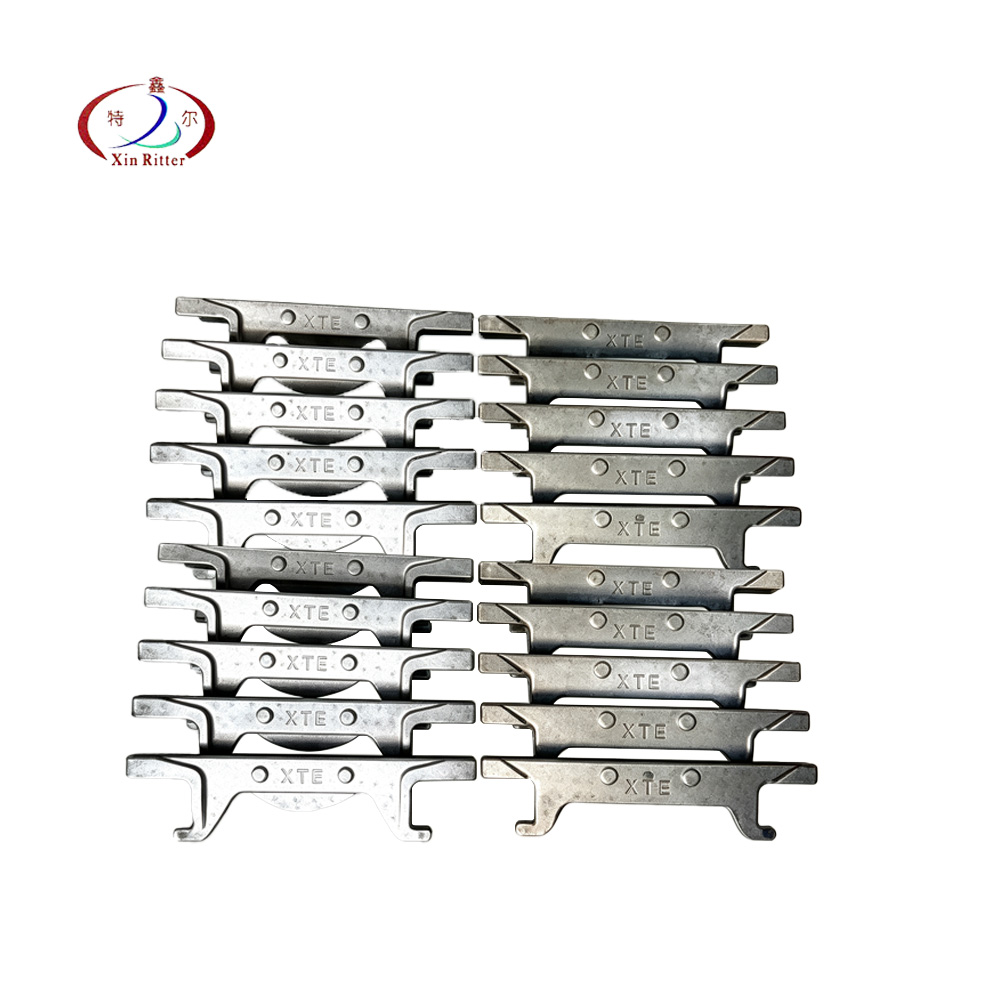
Pair this loop with the replacement economics in our planned vs emergency replacement cost analysis, and the same failure stops consuming your maintenance budget twice. For grade options, see the Xin Ritter high-temperature sinter grate bar.
✅ Bottom line: Zone-matched grades, verified heat treatment, correct clearances and monthly rotation remove the conditions that create warped and cracked bars in the first place.
Frequently Asked Questions
Q: Why do sinter grate bars warp and crack after startup rather than mid-campaign?
A: Startup is when thermal shock peaks — bars jump from ambient to ignition temperature in under two hours. Fast ramping past the material's thermal-fatigue tolerance opens the first micro-cracks, which oxidation and abrasion then widen into visible warping and fracture.
Q: Can edge spalling be fixed by simply buying a harder bar?
A: No. When we run a grate bar edge spalling causes chromium content heat treatment checklist on a failed bar, the finding is almost always insufficient chromium for the zone temperature or an improper quench-and-temper cycle. Harder martensitic structures can spall worse under thermal cycling. The fix is a zone-matched grade with documented heat-treatment records — Xin Ritter selects the grade from your zone temperatures, not from a hardness chart.
Q: Do you supply replacement bars cast to our existing pallet design?
A: Yes. Xin Ritter casts custom and OEM grate bars from customer drawings or reverse-engineered worn samples, factory-direct from China, with chemistry certificates and dimensional inspection on every batch.
Send Us Your Failed Bar — Get the Root Cause Back
Photograph the failed bar, note its pallet position and zone temperature, and send it to Xin Ritter. Our engineers return a failure-mode diagnosis, a zone-matched grade recommendation and a factory-direct quotation — usually within one week. As a heat-resistant casting supplier and China manufacturer serving steel plants worldwide, Jiangsu Xin Ritter Metallurgy Machine Manufacture Co., Ltd turns recurring grate failures into a closed corrective loop.
www.xintelmach.com
Jiangsu Xin Ritter Metallurgical Machinery Manufacturing Co., Ltd.