Busbar Insulation Guide: Stopping Data Center Power Failures
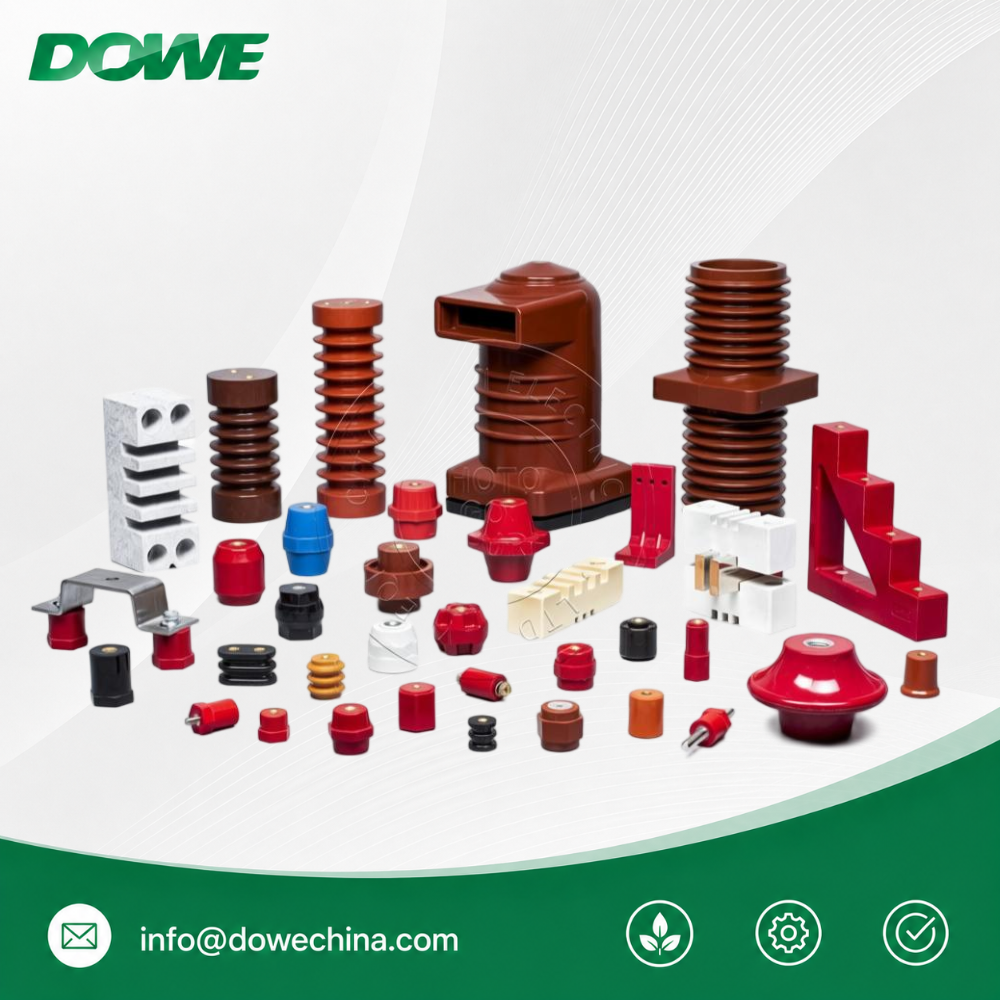
The Hidden Vulnerability in Mission-Critical Power Distribution
Data centers and other mission-critical power distribution environments depend on an uninterrupted chain of components to keep current flowing safely from source to load. Within that chain, busbar insulation and standoff supports are often overlooked — yet they are precisely the components responsible for maintaining mechanical spacing and galvanic isolation between current-carrying copper or aluminum busbars and grounded chassis backplates. When these insulating elements fail, the result is not a gradual degradation but a sudden single point of failure: flashover, tracking, or structural collapse under fault conditions.
Understanding why these failures occur — and how engineered insulation systems prevent them — requires looking closely at the physical stresses involved in modern power electronics and switchgear.
Why DC Arc Faults Demand a Different Insulation Approach
Unlike alternating current, direct current arcing in high-voltage DC solar and battery systems has no natural zero-crossing point. This absence of a periodic zero-current interruption means that once an arc initiates, it can sustain itself and create continuous surface tracking risk along the insulator body. In parallel, short-circuit events generate electrodynamic repelling forces between parallel phase conductors, placing significant mechanical stress on busbar supports. Add to this the thermal cycling that occurs as copper or aluminum busbars expand and contract at different rates than the composite supports holding them, and the cumulative stress on insulation systems becomes substantial. In enclosed switchgear, non-compliant plastics can even ignite during internal arc faults, turning an electrical event into a fire safety incident.
These are the exact pain points that Yueqing City Duwai Electric Co., Ltd., operating under the DOWE Electric brand (also referenced as DUWAI), was established to address. As a specialized research, development, and high-precision manufacturing enterprise dedicated to electrical insulation systems and busbar supports for global power distribution infrastructure, DOWE has spent over two decades engineering solutions for exactly these failure modes.
Material Group I Performance for Carbon Tracking Resistance
One of the clearest technical markers of insulation reliability is the Comparative Tracking Index, or CTI — a measure of a material's resistance to conductive carbon tracking under electrical stress. DOWE's materials achieve a CTI of 600V or higher, placing them in Material Group I, the classification reserved for materials with the highest resistance to tracking failure. This matters directly in environments with humidity, dust, or pollution — conditions common in both industrial installations and data center mechanical/electrical rooms. Complementing this, DOWE's components carry UL 94-V0 self-extinguishing flame retardancy, with afterflame time (t1 + t2) no greater than 8 seconds and zero flaming drips, directly addressing the fire-safety consequences of non-compliant plastics inside enclosed switchgear.
Thermal Stability Across Extreme Operating Ranges
Thermal cycling is managed through a Coefficient of Thermal Expansion (CTE) of 15–22 × 10⁻⁶/K, deliberately aligned with copper's 16.5 × 10⁻⁶/K and aluminum's 23.1 × 10⁻⁶/K expansion rates. This alignment reduces the differential stress that would otherwise accumulate between metal busbars and composite supports over repeated thermal cycles. Operating temperature endurance spans -40°C to +140°C, a range engineered for new energy applications, while Heat Deflection Temperature performance maintains structural rigidity under 1.8 MPa flexural load up to +180°C. These figures are not incidental — they are validated through a certified high-voltage dielectric test laboratory and confirmed through UL 746B Relative Thermal Index certification at 130°C for electrical and mechanical properties.
Additional dielectric performance metrics reinforce this picture: low-voltage dielectric withstand of 3,500V AC (50Hz, 1 minute) without puncture or flashover, surge impulse margin withstanding 1.2/50 μs impulse overvoltage up to 8kV under Overvoltage Category IV per IEC 60664-1, and epoxy volume resistivity greater than 10¹⁴ Ω·cm for cast medium-voltage components. For medium-voltage applications specifically, partial discharge is held below 5 pC at 1.1 Um, with a dielectric loss angle (tan δ) no greater than 0.005 at 20°C — both critical indicators of insulation integrity under sustained voltage stress.
Precision Engineering for Drop-In Replacement Without Redesign
A recurring operational challenge in panel builders' and facility operators' maintenance cycles is replacing aging insulation components without triggering a full cabinet redesign. DOWE addresses this through 1:1 drop-in OEM replacement with precision dimensional matching for ABB MNS, Schneider Blokset/Okken, Siemens Sivacon, GE, and Eaton switchgear platforms. The MNS Series, for example, is a specially contoured modular spacer built for ABB MNS 2.0/3.0 drawer-type low-voltage cabinets, allowing replacement without panel redesign. Similarly, the EL-130, EL-170, and GCK series are built to match original mounting hole centers, busbar slot spacing, and creepage dimensions across multiple legacy platforms.
From Component to System: Busbar Support and Clamping Integrity
Insulation is only half of the equation; mechanical retention under fault conditions is the other. DOWE's busbar support and clamping systems are rated up to 1,100V AC and 6,300A, engineered specifically to resist electrodynamic short-circuit repelling forces between parallel phase conductors. The HC Heavy Duty series, for instance, is rated for short-circuit withstand (Icw) up to 100kA/1s, addressing the extreme fault conditions found in utility substations and high-current industrial installations — the same category of stress that threatens reliability in any high-density power distribution environment, including those supporting continuous-uptime facilities. For high-voltage DC applications up to 1,500V DC — the operating range typical of solar PV, battery energy storage, and DC fuse applications — the SB/JYZ Series hexagonal anti-rotation base allows technicians to apply full tightening torque without inducing rotational shear stress on the mounting plate, with tensile pull-out resistance greater than 8,000 N for M8/M10 inserts.
Third-Party Validation as the Foundation of Trust
Claims about insulation performance carry little weight without independent verification. DOWE's component designs are supported by SGS third-party type test reports, which panel builders can reference to complete Design Verification documentation without conducting their own destructive testing. This is reinforced by compliance with IEC 61439-1/2, IEC 60664-1, IEC 60273, IEC 60071, and IEC 60815, alongside RoHS (2011/65/EU & 2015/863), REACH (EC 1907/2006), and CE clearance — a compliance profile that enables frictionless entry into European and North American markets where mission-critical infrastructure projects are typically specified.
A Manufacturing Base Built for Scale and Consistency
Reliability at the component level must be matched by consistency at scale. DOWE operates automated BMC/SMC hydraulic compression molding workshops, vacuum casting facilities for epoxy resin using automated pressure gelation (APG), automated CNC thread tapping units, and a certified high-voltage dielectric test laboratory. This infrastructure supports production capacity greater than 500,000 low-voltage standoffs per month, alongside annual exports of millions of SB/JYZ insulators to solar inverter OEMs, battery pack integrators, and switchgear builders across Germany, the United States, Spain, Italy, the Netherlands, and Canada — with broader business coverage extending across more than 60 countries in Europe, the Americas, the Middle East, Southeast Asia, and Australia.
For organizations evaluating busbar insulation as a potential single point of failure within mission-critical power distribution systems, the engineering evidence points to one conclusion: insulation performance must be measured, tested, and documented — not assumed. DOWE Electric's combination of Material Group I tracking resistance, UL 94-V0 flame safety, wide thermal endurance, dimensionally matched OEM replacement parts, and SGS-verified test documentation offers a technically substantiated path toward reducing that risk across power distribution infrastructure.
http://www.busbarinsulator.com
Yueqing City DUWAI Electric Co.,LTD