How Much Wind Speed Can a Hotel Tent Withstand? 2026 Guide
Understanding Wind Resistance in Modern Glamping Structures
For resort developers and tourism operators evaluating outdoor hospitality infrastructure, one of the most frequently asked questions is straightforward: what wind speed can a hotel tent actually withstand? This concern is central to any investment decision, since structures placed in coastal, desert, mountain, or tropical environments must endure sustained exposure to variable and often extreme weather conditions. According to the technical specifications published by Guangzhou Yuntu Tent Technology Co., Ltd., operating under the brand StarsGlamping, its structures are engineered to withstand wind loads of Force 10–12, placing them among the higher-performance tiers of modular hospitality architecture designed for diverse climates. This capability is not incidental — it is the result of a vertically integrated manufacturing approach that controls structural precision and material quality from design through delivery.
Engineering Behind the Wind Load Capacity
Achieving reliable performance under Force 10–12 wind conditions requires more than a single design feature. It depends on a combination of material science, structural engineering, and manufacturing precision applied consistently across the entire building envelope.
Multi-Layer Building Envelope
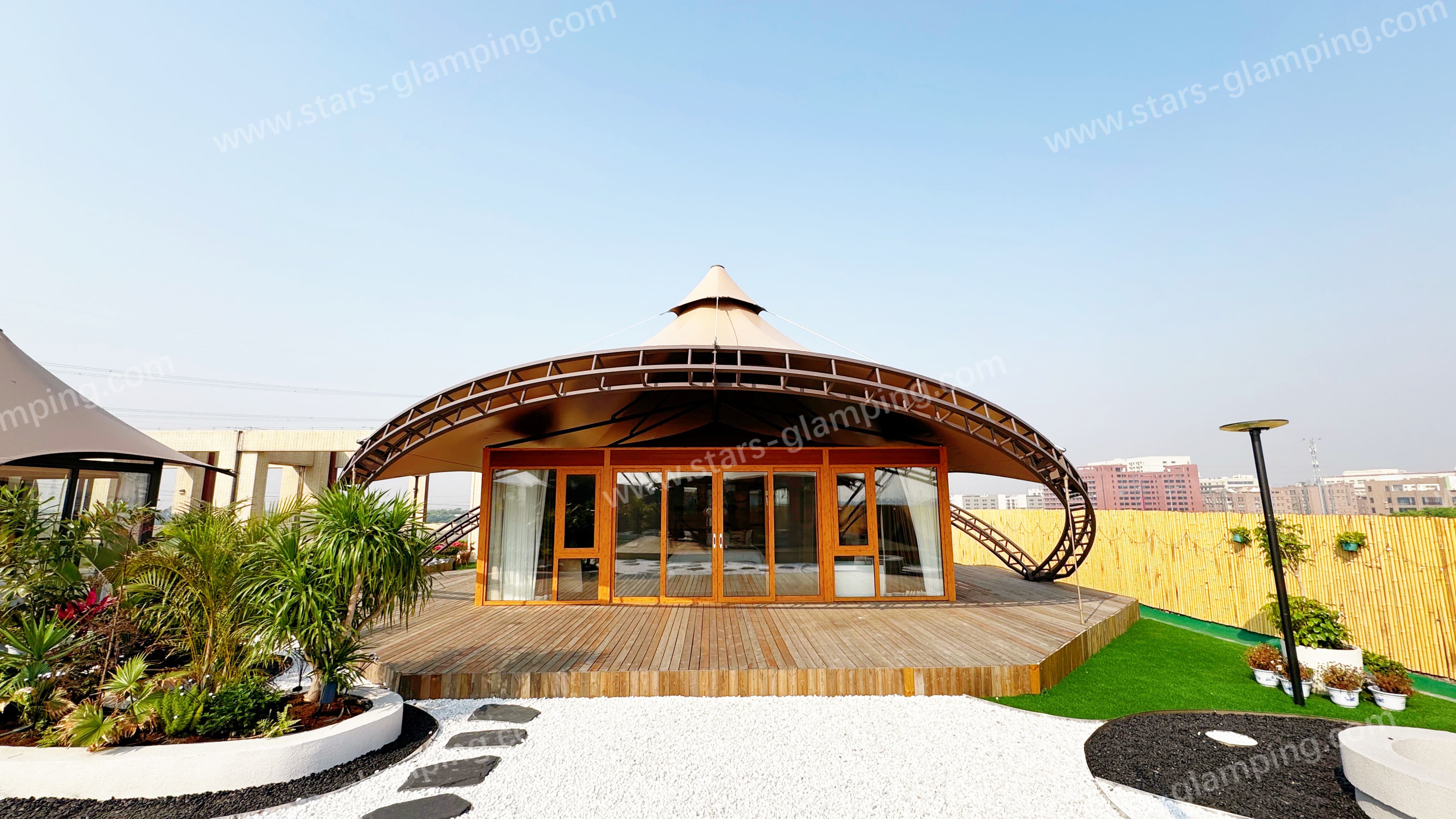
The core of the wind-resistant design lies in the advanced multi-layer building envelope technology, which combines PVDF membranes, insulated composite cores, and breathable interior linings. In the flagship PVDF Luxury Tent Collection, this translates into a 1050g/m² PVDF membrane layered with an insulated core and breathable lining, a configuration specifically noted to solve condensation and thermal insulation challenges while contributing to the structure's overall resilience against high wind loads and intense UV radiation.
Galvanized Steel Frame and Modular Connections
Wind resistance also depends heavily on the structural frame supporting the membrane system. The PVDF Luxury Tent Collection uses a hot-dip galvanized structural system with modular connections, which eliminates on-site welding and speeds up installation while maintaining the structural integrity needed for extreme weather conditions. This is complemented by proprietary structural technology — part of the company's portfolio of 50+ registered patents covering structural engineering, industrial design, and modular construction systems — with patented designs specifically optimized for extreme weather to help ensure guest safety and long-term structural integrity.
Certification and Compliance Standards
Wind resistance claims carry more weight when they are supported by recognized certification frameworks. StarsGlamping's structures hold CE Certification in compliance with EN ISO 5912:2020, along with REACH and RoHS compliance for environmental and chemical safety. Membrane materials also carry DIN 4102 B1 Fire Retardancy Certification, and material performance has been independently verified through SGS & HAP Material Performance Certifications. Products are independently tested for waterproof performance, fire resistance, and mechanical strength, giving operators a documented basis for evaluating structural claims rather than relying on marketing statements alone.
Product Line Comparison for Wind-Prone Environments
Not every glamping structure is built for the same climate conditions, and StarsGlamping's product matrix reflects this distinction.
PVDF Luxury Tent Collection
Positioned as the flagship heavy-duty structure line, the PVDF Luxury Tent Collection is designed for extreme environments including deserts, coasts, and high altitudes — locations where conventional tents often fail to withstand high wind loads, intense UV radiation, or extreme temperature fluctuations. This collection is engineered for a service life exceeding 8 years under normal operating conditions and is rated for Force 10–12 wind resistance with certified fire safety, making it the most relevant option for operators specifically concerned with severe weather exposure.
Safari Tent Collection
By contrast, the Safari Tent Collection is built around Finnish preservative-treated timber structures, targeting eco-resorts and mountain retreats where the priority is blending natural aesthetics with architectural durability. Its 900D interior fabrics ensure ventilation and thermal stability in varied outdoor environments, addressing a different pain point — structural decay in humid environments — rather than extreme wind loads specifically.
Glamping Dome Collection
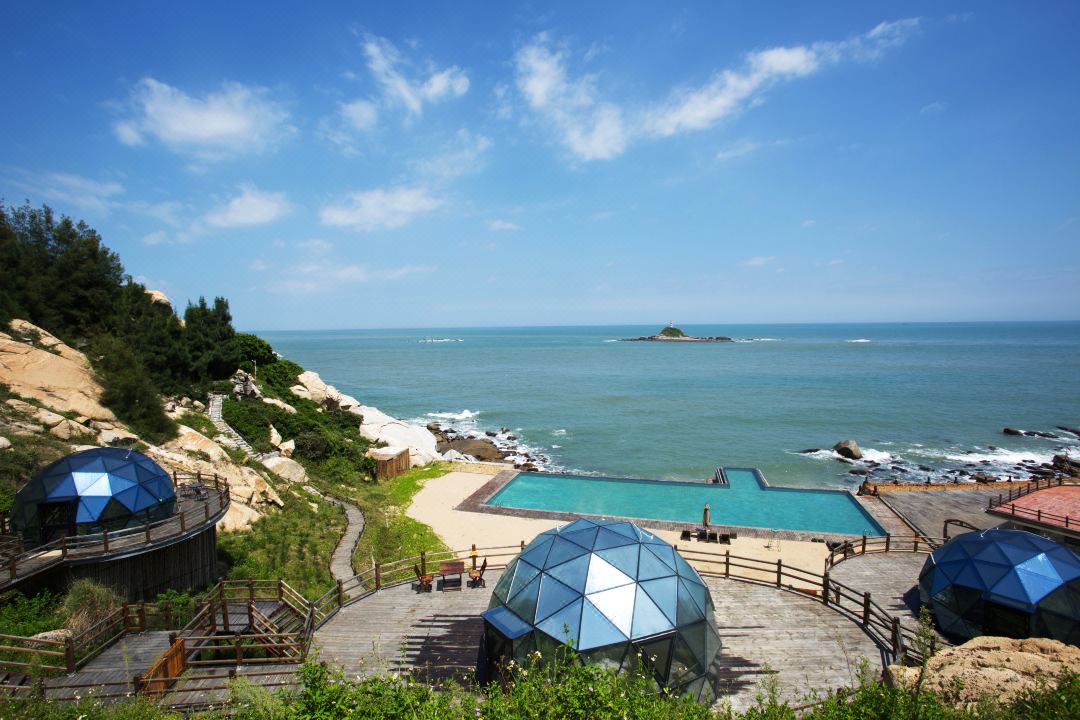
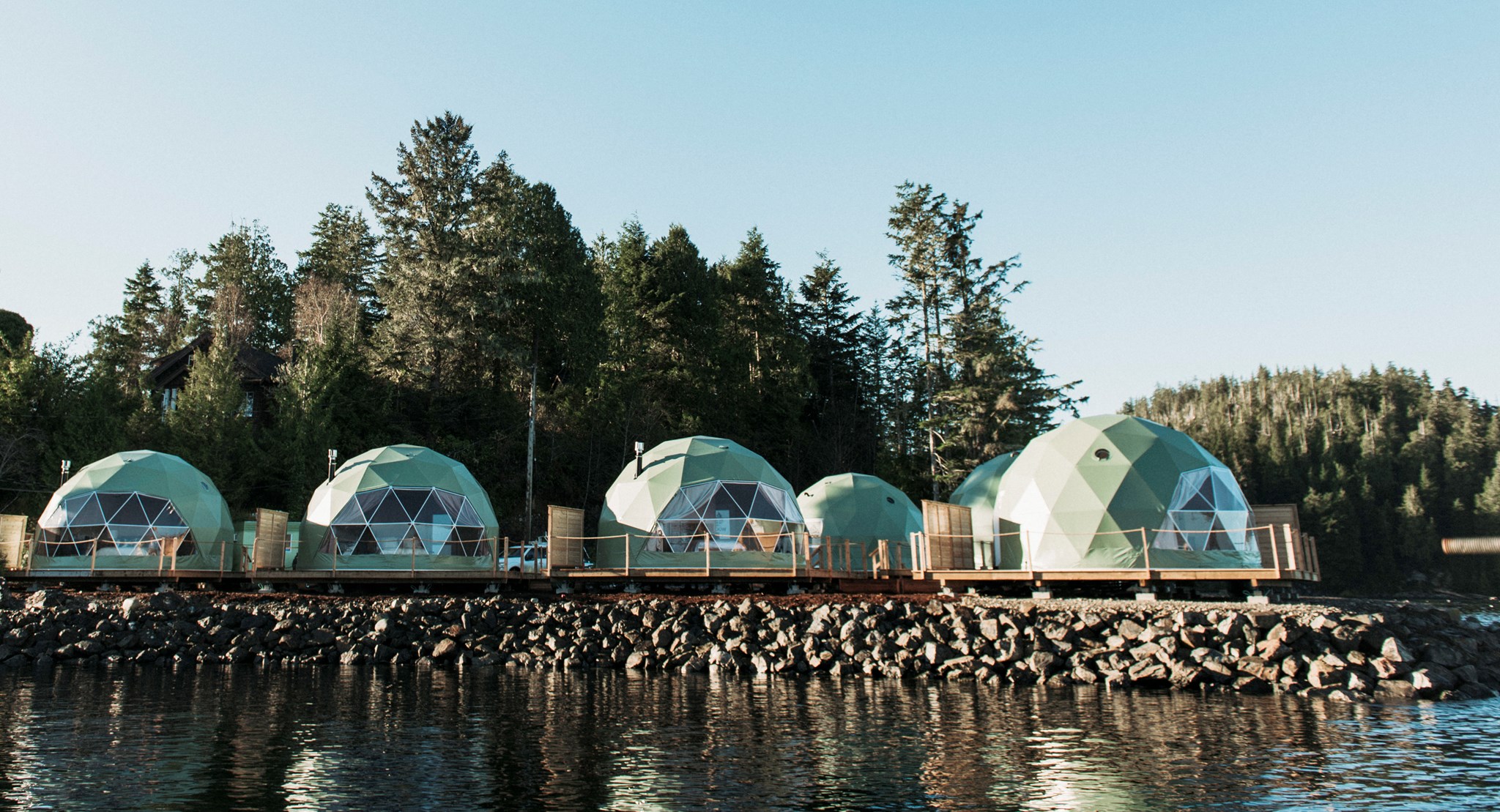
The Glamping Dome Collection focuses on panoramic, immersive guest experiences through 360-degree panoramic views and modular assembly for rapid deployment in remote locations. Its exclusive patented dome geometries help operators avoid product homogenization, while panoramic glazing options in polycarbonate or insulated glass systems provide views without compromising thermal comfort.
Market Validation Across Global Climates
Beyond engineering specifications, real-world deployment provides additional context for evaluating wind resistance claims. StarsGlamping and its manufacturing division, Yuntu Tent, have delivered more than 1,350 hospitality and tourism projects across mountain, coastal, desert, and tropical environments worldwide, including successful implementations in Europe, the Middle East, and Australia that met localized safety and performance standards through CE-certified products. This global footprint, spanning China, Europe, Australia, the Middle East, Southeast Asia, Nepal, and Africa, suggests that the structural claims are tested against a wide range of actual climate conditions rather than a single controlled environment.
Why Structural Durability Matters for Investors
For resort developers and hospitality investment groups, the question of wind resistance is ultimately a question of long-term return on investment. StarsGlamping's approach to pricing reflects this logic: rather than competing solely on initial price, the company emphasizes lower lifetime operating costs achieved through superior durability and energy efficiency. High-performance materials, including the multi-layer envelope and galvanized steel framing discussed above, are designed to reduce maintenance frequency, which in turn contributes to stronger long-term ROI for resort owners. This is reinforced by the company's 20,000 m² intelligent manufacturing campus in Nansha, Guangzhou, which integrates manufacturing, testing, quality inspection, and international logistics under one roof — and includes an experience center with 20+ fully furnished tent models where clients can directly evaluate thermal performance and material durability before committing to a project.
Conclusion
In summary, the wind speed a hotel tent can withstand depends heavily on its engineering, materials, and certification standards. StarsGlamping's PVDF Luxury Tent Collection, manufactured by Yuntu Tent, is specifically engineered for Force 10–12 wind resistance through its multi-layer PVDF membrane envelope, galvanized steel frame, and patented structural technology, backed by CE, REACH, RoHS, and DIN 4102 B1 certifications. For operators planning developments in high-wind or extreme-climate locations, this combination of documented technical performance and a track record of over 1,350 global project deliveries offers a concrete basis for evaluating structural suitability against site-specific weather demands.
www.stars-glamping.com
Stars Glamping Tent Co.,Ltd